
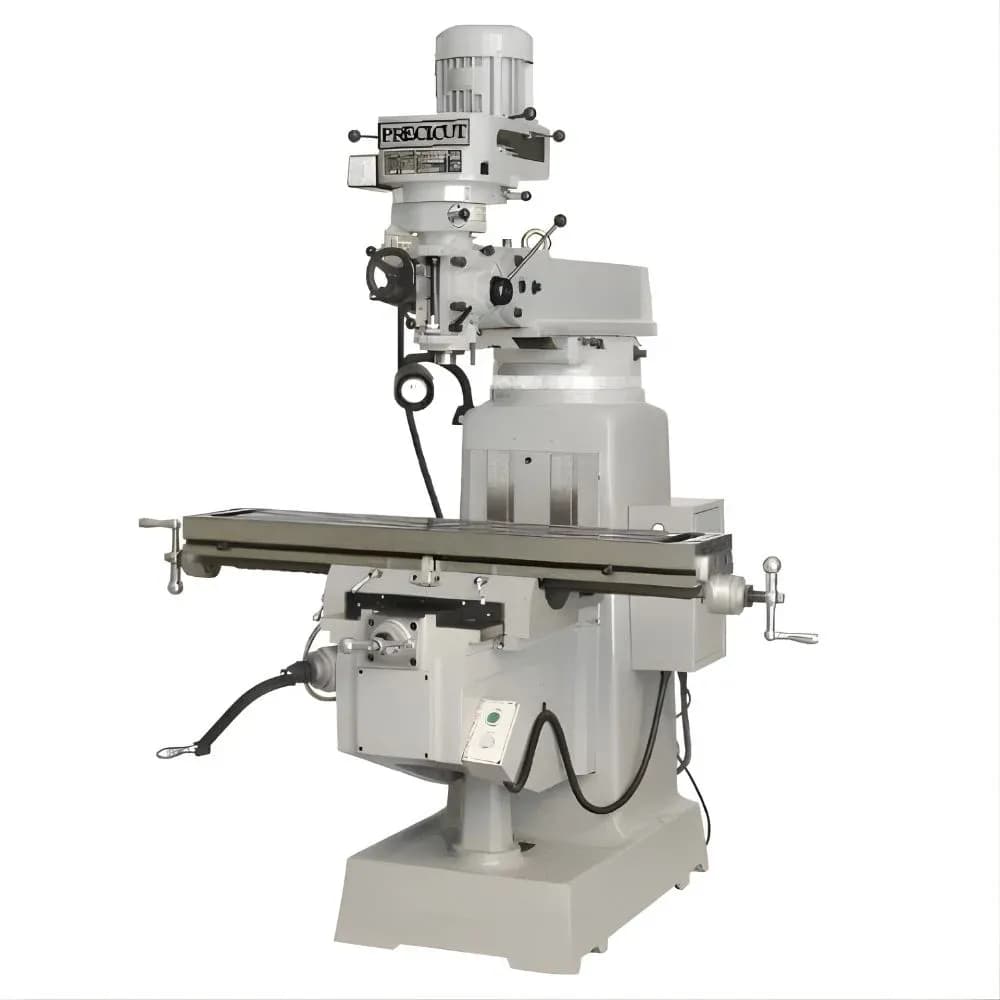
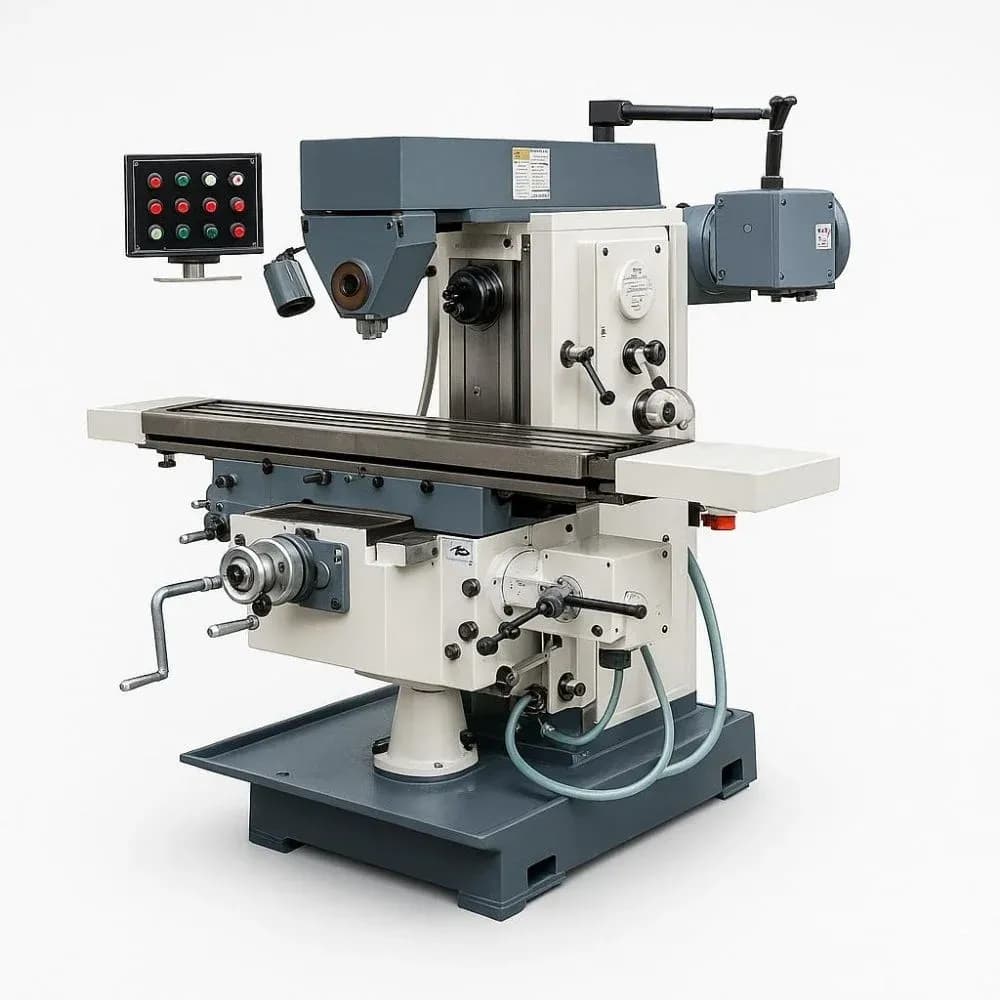
Milling machines are an essential workhorse in any metalworking or manufacturing environment, used to cut, shape and surface-finish material with a level of precision that few other machine tools can match. At ATPL, we source our milling machines directly from Taiwan, known across the world for world-class machine tool engineering. This gives Indian manufacturers reliable access to the most trusted milling technology in the world.
Our milling machine range covers the core configurations that Indian workshops and production floors depend on:
- Precicut M1TR Vertical Milling Machine — a Column-and-Knee/Turret-type vertical mill, available with an optional Digital Read Out (DRO) upgrade for enhanced measurement accuracy — ideal for fine precision and general-purpose milling
- Horizontal Milling Machines — spindle mounted horizontally, built for heavier cutting operations, slab milling, and high-volume, large-scale production
Ask our team about adding DRO to your machine — it's a popular upgrade that pays for itself in faster, more accurate setups.
This Universal/Turret-style construction — often called a Column and Knee Type or Vertical Turret Milling Machine in the industry — is what makes the M1TR so versatile: the same machine handles everything from fine tool-room work to routine production milling.
Unlike a lathe, which turns the workpiece against a fixed cutting tool, a milling machine brings a rotating cutter directly into the material — enabling far more intricate shapes, slots, and contoured surfaces than turning alone can achieve.
Milling Machine Components Explained
Knowing the core components of a milling machine helps you assess build quality before you purchase:
- Spindle — supports and rotates the milling cutter at the desired speed
- Column — vertical support structure containing the drive mechanism and controlling vertical movement
- Knee — This is a key feature of column-and-knee type mills such as the M1TR. It supports the table and controls vertical (Z-axis) adjustment.
- Table — holds and positions work under cutter
- Arbor (on horizontal mills) — the shaft which supports and drives the cutting tool
- Base — the solid foundation that absorbs vibration and keeps the machine aligned under load
How these components are manufactured and aligned is critical to the accuracy and service life of a milling machine, which is why ATPL sources from established Taiwanese manufacturers, rather than cutting corners on build quality.