
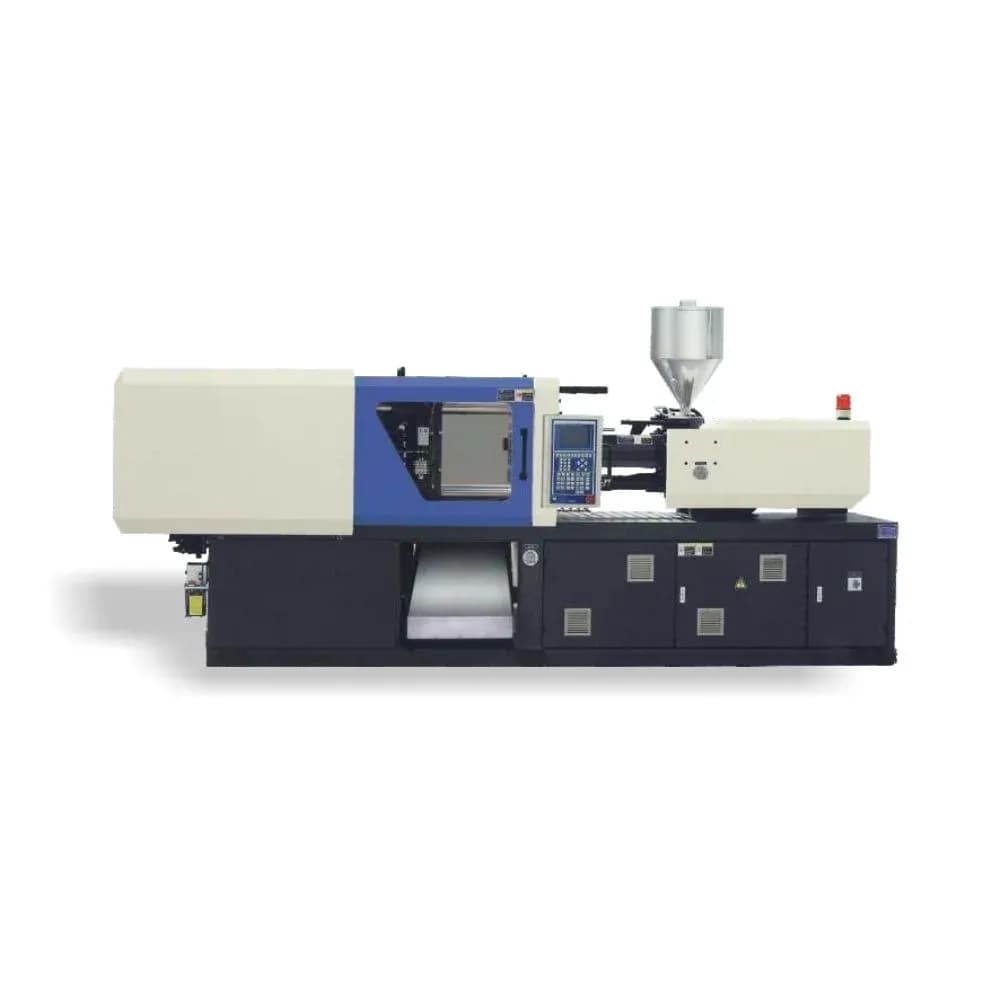
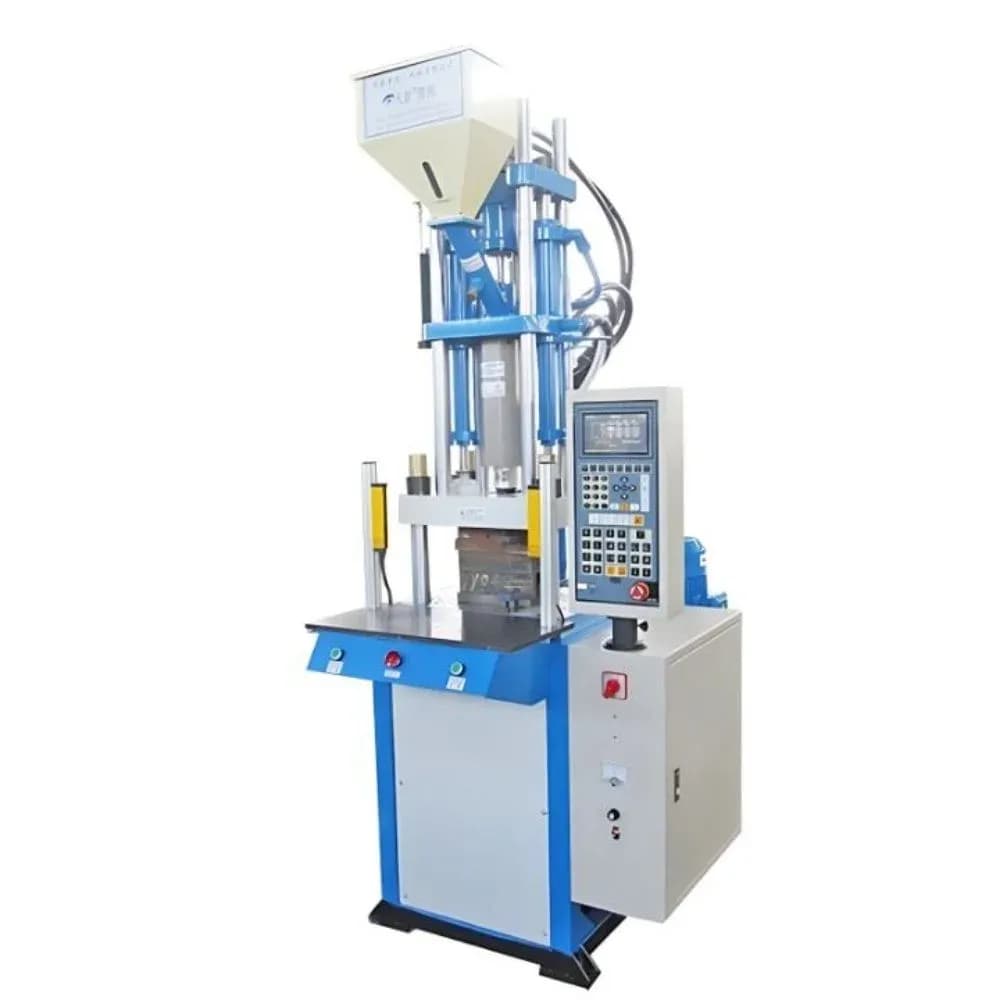
An injection moulding machine melts plastic granules and injects the melt into a closed mould under pressure. The part cools, the mould opens, the part is ejected and the cycle starts again. ATPL supplies Precimould machines in two configurations, so you can match the machine to your part, your volume and your floor space:
- Horizontal Injection Moulding Machine (PM Series) — 16 models from PM-50S to PM-1260S, with clamping force from 500 kN to 12,600 kN (roughly 51 to 1,285 ton) and theoretical shot weight from 50 g to 7,937 g, built for high-volume production of plastic parts
- Vertical Injection Moulding Machine (MPT Series) — 9 models from MPT-150 to MPT-2500, with clamping force from 15 to 250 ton, screw diameters from 22 to 70 mm and theoretical injection weight of up to 900 g, in a vertical layout where the mould closes top to bottom
Both series follow the same basic layout: an injection unit and a clamping unit, driven by a hydraulic pump motor. The PM-Series pump motors run from 7.5 kW to 55+45 kW, and the MPT Series from 4 to 30 kW, so power draw scales with the size of the machine. The PM Series uses variable pumps and servo-driven gear pumps to bring down energy use.
Each series has its own page with a full model comparison table. Open the one that fits your job and compare screw diameter, shot weight, platen size and tie-bar spacing before you request a quote.
Main Parts of an Injection Moulding Machine
- Injection Unit — the screw and barrel that melt the plastic and push it into the mould
- Clamping Unit — platens and tie bars that hold the mould shut against injection pressure
- Hydraulic System and Pump Motor — power the clamping, injection and ejection movements
- Heating System — barrel heater bands that keep the plastic at the right melt temperature
- Ejector — pushes the finished part out of the mould at the end of each cycle
- Control Panel — sets and monitors the moulding cycle